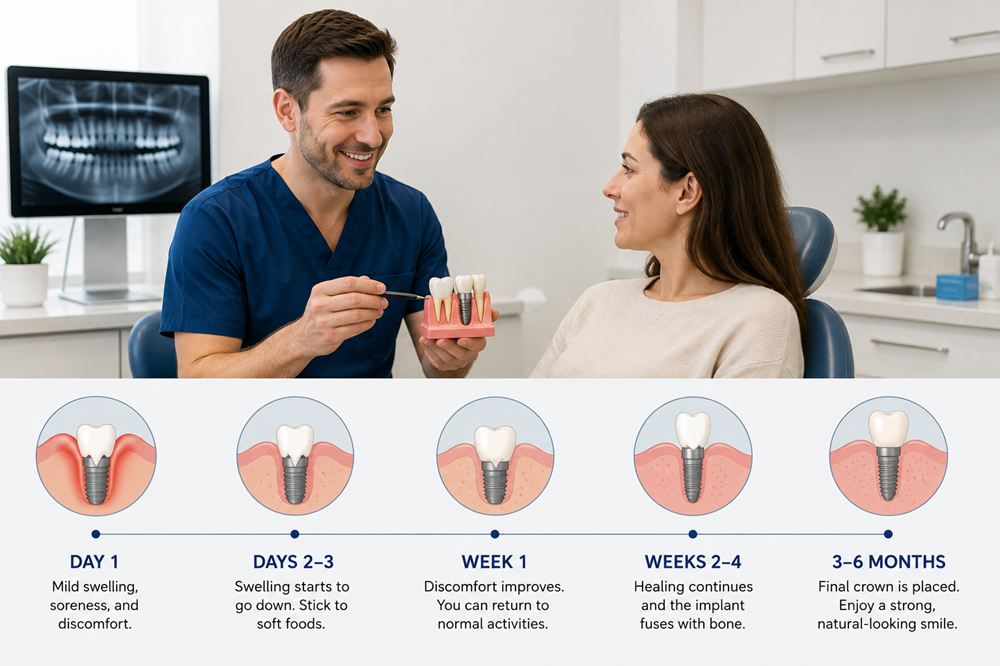
Understanding the healing journey after a dental implant. After a single-tooth implant procedure, you may start looking for guidance from a dental clinic near you to understand what recovery feels like and how healing progresses. The recovery phase is an important part of the treatment because it allows the implant to bond properly with the jawbone and create a stable foundation for a replacement tooth.
Healing does not happen all at once. It takes place step by step as the body adjusts and rebuilds strength in the treated area.
Early Recovery Phase: The First Few Days
The first few days after a dental implant are usually the most sensitive. Mild swelling, soreness, and some discomfort are normal during this time.
You may notice:
- Swelling in the area
- Slight gum sensitivity
- Light bleeding in the first 24 hours
- Mild pain while chewing
- Feeling a little tired
These are normal signs and usually improve as healing begins.
During this time, you should follow simple care steps to help healing and prevent irritation while getting dental implants near you.
How the Body Begins Healing
Once placed, healing begins immediately. The implants provide stability as they gradually fuse.
This process is called integration and happens in stages:
Initial Healing
- Gum tissue begins to close around the implant.
- Swelling gradually reduces
- Discomfort begins to ease.
Bone Integration
- Jawbone slowly connects with the implant.
- Stability improves over several weeks to months.
- The implant becomes a strong support for the future crown.
What to Expect During the First Two Weeks
The healing gets more pronounced during this phase. Most patients feel much better after the first few days.
Frequent changes include:
- Swelling reduction.
- Reduced sensitivity.
- Enhanced comfort while consuming soft food.
- Resuming daily life after lockdown.
A dentist in Yaletown might monitor your progress during follow-up visits to ensure the implant is healing properly and that the surrounding tissue remains healthy.
Daily Care During Recovery
To support healing and prevent problems, good care is very important.
Helpful recovery steps include:
- Eat soft foods like yogurt, soup, and mashed food.
- Do not eat hard or chewy foods.
- Keep the area clean by brushing gently.
- Follow all instructions given by your dentist.
- Do not bite or put pressure on the implant area.
Good care during this time helps the implant heal well and last longer.
Middle Healing Phase: Weeks 3 to 8
As healing continues, most discomfort disappears, and normal routines begin to feel easier.
During this stage:
- Gum tissue becomes stronger.
- Swelling is usually gone.
- Eating becomes more comfortable.
- The implant continues bonding with bone.
Patients exploring dental implants often find this phase important because it determines how well the implant integrates before the final crown is placed.
Long-Term Healing and Stability
The jawbone continues to strengthen around the implant after the healing stage. This stage can take months based on the individual’s healing pace.
During this time:
- The implant becomes fully stable.
- The foundation for the crown is completed.
- Oral function continues improving.
- Normal chewing strength gradually returns.
This long-term process is key to ensuring durability and success.
Common Recovery Experiences
Every patient has their own way of healing, but certain experiences are common.
- Slight pressure while chewing to begin with:
- Fading tenderness.
- Getting back to a normal eating routine.
- Increased comfort every week.
- Confidence increases as healing unfolds.
Patients tend to equate their early discomfort with their long-term stability and comfort post-healing.
Tips for a Smoother Recovery
Recovery becomes easier when you follow good habits.
- Rest for the first 1–2 days.
- Do not drink alcohol or smoke while healing.
- Eat soft foods at first.
- Keep your mouth clean and brush gently.
- Go to all follow-up visits.
These steps help avoid problems and support faster healing.
Benefits of a Fully Healed Single Tooth Implant
When healing is complete, the implant provides long-term benefits.
- Chewing system restored.
- Authentic smile.
- Increased speaking ease.
- Replacement of a tooth that is stable.
- Long-lasting oral function
Many patients find the recovery process worthwhile due to these benefits.
Start Your Path Toward a Stronger, Restored Smile!
Healing after a single-tooth implant happens in steps and focuses on comfort, stability, and long-term strength. With proper care, follow-up visits, and good oral hygiene, the implant can settle well and work like a natural tooth over time. Book a consultation today to discuss your treatment options and get professional dental implant care with Abba Dental.
FAQs
Is pain normal after a dental implant?
Yes. Mild pain or discomfort is normal for a few days and will get better as healing progresses.
Can I eat normally after a dental implant?
Soft foods are best at first. You can gradually return to normal foods as you feel better.
What helps an illness recover faster?
If you maintain good oral hygiene, eat soft foods, and follow your dentist’s instructions, healing will go smoothly.
When is the last crown positioned?
The crown is placed once the implant has bonded to the jawbone, which usually takes a few months.