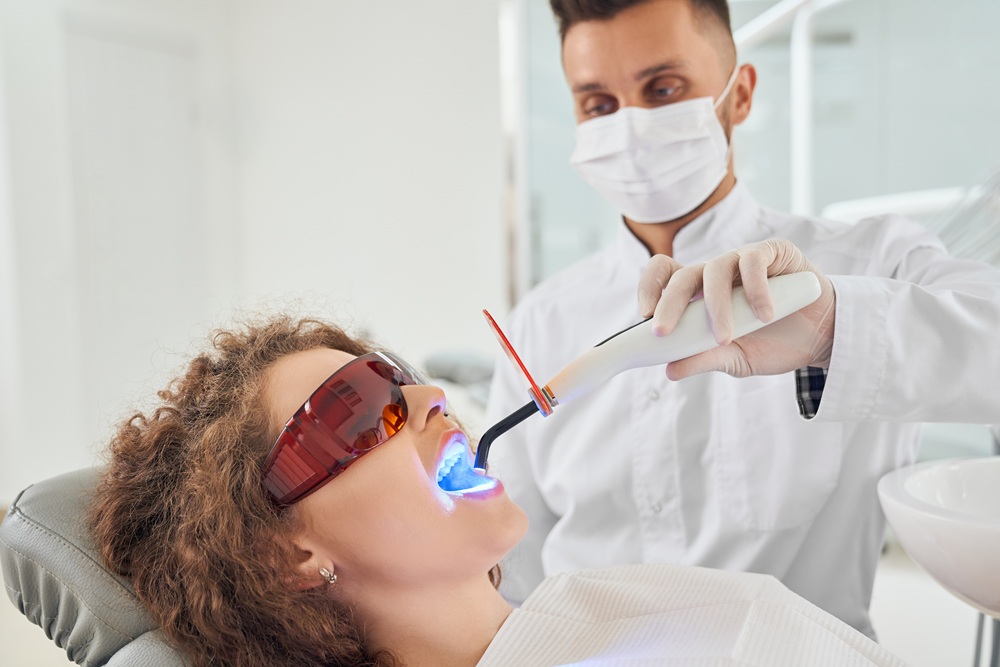
You shouldn’t have to endure uncomfortable zings or persistent temperature sensitivity in order to brighten your grin. Because they fear their teeth are too sensitive to whitening treatments, many patients forgo cosmetic procedures altogether. Thankfully, you can get a glowing, stain-free smile without having to endure needless suffering by scheduling an appointment with a helpful dentist near you.
Understanding why sensitivity occurs and taking proactive steps before, during, and after your treatment with an experienced dentist in Yaletown can help ensure a smooth, comfortable experience.
Why Does Teeth Whitening Cause Sensitivity?
Deep-set enamel stains are mostly removed by whitening products using hydrogen peroxide or carbamide peroxide. In order to access the underlying discolouration in the dentin, the peroxide momentarily creates tiny pores in your tooth enamel.
Short-lived, sharp sensations are produced by means of this temporary opening, which lets in hot, cold, or sweet sensations to head immediately to the inner nerve pathways. Thankfully, this sensitivity is nearly always temporary and completely controllable with an appropriate method.
Tips to Reduce Discomfort Before and During Treatment
If you are prone to tooth sensitivity, you can take simple, effective steps to prepare your smile and minimize discomfort:
- Use Desensitizing Toothpaste First: Brush with a potassium nitrate toothpaste for two weeks leading up to your treatment to calm nerve endings.
- Choose Professional Custom Trays: Custom-fitted trays properly retain bleaching gel on enamel surfaces, whereas over-the-counter strips often leak onto the gums.
- Select Lower Gel Concentrations: Using a lower-strength peroxide gel to pace your treatment can produce lovely results while maintaining your teeth’s comfort.
- Space Out Your Whitening Sessions: If whitening at home, wear your custom trays every other day rather than consecutive nights to give teeth time to rehydrate.
Professional Care vs. Over-the-Counter Options
Store-offered whitening kits and strips often contain high-strength chemicals and one-size-fits-all trays that can easily seep onto sensitive gum tissue, increasing enamel sensitivity and causing chemical burns.
Selecting expert teeth whitening in Yaletown offers you the right to access custom-tailored remedies supervised with the aid of skilled clinical teams. Professional remedies include integrated desensitizing agents, fluoride treatments, and unique software methods designed to shield your teeth and keep you completely safe.
By choosing professionally monitored teeth whitening, you can safely remove stubborn coffee, tea, or wine stains while preserving your overall enamel health.
Ready to Love Your Smile Again?
If you are looking for gentle teeth whitening options or want guidance from a knowledgeable dentist, our dedicated team is here to help you achieve a bright, pain-free smile.
Contact Abba Dental today to schedule your personalized cosmetic whitening consultation!
Frequently Asked Questions
How long does tooth sensitivity usually last after whitening?
After treatment, sensitivity often peaks within 24 hours and declines over two to three days.
Can people with naturally sensitive teeth safely whiten their smile?
Yes, patients with sensitive teeth can whiten safely using custom trays and desensitizing pretreatment gels.
Does professional teeth whitening damage your natural tooth enamel?
No, enamel pores are temporarily opened during carefully monitored whitening procedures without permanently damaging the enamel.
What should I avoid eating or drinking right after whitening?
For 48 hours after treatment, avoid acidic foods, hot coffee, dark wine, and cold beverages.
How does desensitizing toothpaste help reduce whitening pain?
Sharp temperature sensations cannot reach neurons because desensitizing toothpaste blocks tiny nerve channels inside the dentin.